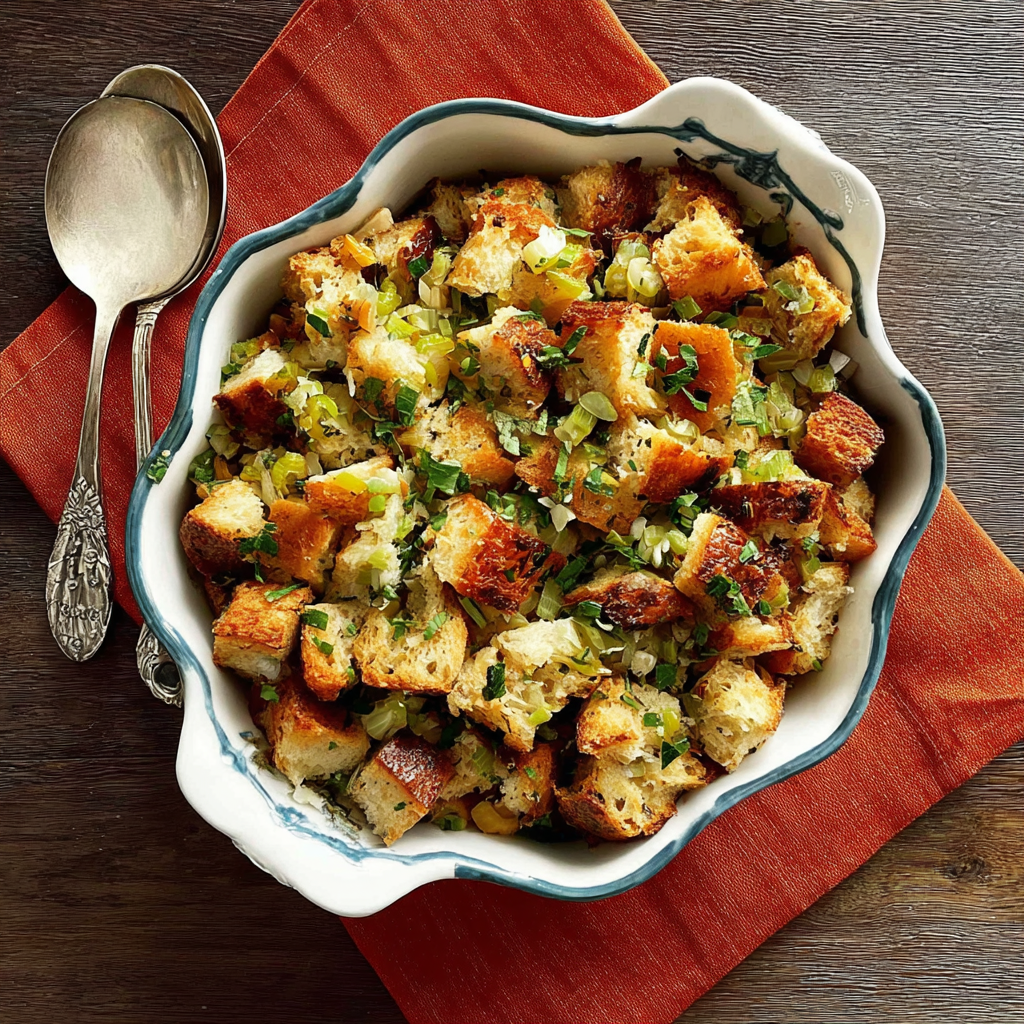
Introduction
Old-fashioned bread stuffing embodies comfort and warmth, evoking memories of family gatherings and holiday feasts. This cherished recipe transcends time, capturing the essence of tradition with its aromatic blend of herbs and spices. As the bread soaks up the rich flavors, it transforms into a delightful side that complements any main dish.
Whether it's for Thanksgiving or a cozy Sunday dinner, this stuffing is a nostalgic reminder of meals shared with loved ones. The simplicity of the ingredients showcases their importance, allowing each one to shine through. Let’s explore how to create this classic dish that’s perfect for every occasion.
Ingredients
- 12 cups stale bread, cubed
Stale bread provides the best texture, allowing it to absorb the broth while maintaining its structure. A mix of white and whole grain can add depth of flavor and contrasting texture. - 1 cup onion, chopped
Onions are essential for building the base flavor of the stuffing. They add sweetness and a savory note that enhances the overall taste. - 1 cup celery, chopped
Celery adds a fresh crunch and subtle earthiness, balancing the richness of other ingredients. It contributes to the stuffing's overall texture. - 1/2 cup unsalted butter
Butter enriches the stuffing, providing a luxurious mouthfeel and flavor. It also aids in sautéing vegetables, bringing out their natural sweetness. - 2 cups chicken broth
Broth infuses the stuffing with moisture and flavor. Chicken broth is traditional, but vegetable broth can be used for a vegetarian option, enhancing the flavor profile. - 1 tablespoon fresh sage, chopped
Sage is a classic herb for stuffing, imparting a warm, earthy flavor that pairs beautifully with bread. Fresh sage enhances the stuffing's aroma and adds a vibrant taste. - 1 tablespoon fresh thyme, chopped
Thyme brings an aromatic note that complements the sage, contributing to the stuffing’s herbal complexity. Its flavor enhances the woodsy elements of the dish. - 1 teaspoon salt
Salt enhances all flavors in the stuffing, making each ingredient more pronounced. It’s important for balancing the overall taste. - 1/2 teaspoon black pepper
Black pepper adds a subtle spiciness and depth, enhancing the overall flavor profile without overpowering the herbs.
Directions & Preparation
Step 1: Prepare the bread.
Start by cutting your stale bread into cubes. Stale bread is key because it absorbs the liquid without becoming mushy, creating that ideal texture in stuffing. If your bread isn’t stale, toast the cubes in a low oven for 10-15 minutes, turning them halfway through to ensure they dry evenly.
Step 2: Sauté the vegetables.
In a large skillet, melt the butter over medium heat. Add the chopped onions and celery, sautéing until the onions are translucent. This step is crucial as it softens the vegetables and enhances their flavors, creating a flavorful base that will infuse the bread.
Step 3: Combine ingredients.
In a large bowl, combine the cubed bread, sautéed onion and celery, chopped herbs, salt, and pepper. Stir gently to distribute everything evenly, ensuring that each piece of bread has access to the flavors. This mixture begins the transformation from simple ingredients into a cohesive stuffing.
Step 4: Add the broth.
Pour in the chicken broth gradually, mixing until the bread is evenly moistened but not soggy. The right amount of broth will depend on your bread; aim for a moist yet sturdy stuffing. If it feels too dry, add a little more broth, ensuring not to drown it.
Step 5: Transfer to a baking dish.
Spoon the mixture into a greased baking dish, spreading it out evenly. This allows for even cooking and browning. Cover the dish with aluminum foil if you prefer a softer stuffing, or leave it uncovered for a crispy top.
Step 6: Bake the stuffing.
Preheat your oven to 350°F (175°C) and place the covered dish in the oven. Bake for about 30-35 minutes. If you want a crunchy top, remove the foil for the last 10-15 minutes of baking. This step is essential as it allows the flavors to meld together and the stuffing to develop a pleasing texture.
Step 7: Serve warm.
Once baked, remove the stuffing from the oven and let it cool slightly before serving. This resting time helps firm it up a bit. Serve warm as a perfect counterpart to roasted meats or as part of a vegetarian feast.

Choosing the Right Bread
Opt for a sturdy bread like sourdough, French, or even cornbread to add unique flavor. Each type brings its own character, enhancing the stuffing's overall taste. Avoid using overly soft breads, as they can turn mushy. A combination of different breads can create a more complex flavor profile.
Herbs: Fresh vs. Dried
Utilizing fresh herbs elevates the stuffing with vibrant flavors and aromas. While dried herbs are convenient, fresh herbs like sage and thyme impart a depth that’s hard to replicate. If using dried herbs, remember to adjust quantities—generally, one-third the amount of dried herbs can be used in place of fresh ones.
Make It Your Own
Feel free to customize the stuffing by adding ingredients such as mushrooms, nuts, or dried fruit. Variations can introduce new flavors and textures, making the dish your own. Consider adding about a cup of any one addition to maintain balance, ensuring it complements rather than overwhelms the traditional flavors.
FAQs
What if my stuffing is too dry?
If your stuffing turns out too dry, add small amounts of broth gradually after it has baked. Covering it while reheating can help steam it lightly, enhancing moisture.
Can I scale this recipe for a smaller gathering?
Absolutely! If you need to reduce the recipe, simply halve each ingredient while maintaining the same proportions to ensure the flavors are balanced.
What can I add for extra flavor?
Consider adding sautéed mushrooms, cranberries for sweetness, or even diced apples for a touch of freshness. Each addition can enhance the stuffing's character.
Why is my stuffing bland?
Bland stuffing often lacks seasoning. Be sure to taste and adjust the salt and pepper before baking, and consider using flavorful broth to boost the overall taste.
Is it okay to use leftover bread?
Yes, leftover bread is ideal for stuffing. Just ensure it's stale enough to absorb the liquids without becoming mushy.
Can I add sausage to this recipe?
Certainly! Brown some sausage before adding it to the mix for a hearty, savory flavor. About a pound is a good amount to mix in with the other ingredients.
Conclusion
Old-fashioned bread stuffing is not just a side dish; it's a heartfelt tradition that brings comfort and joy. Each bite carries the essence of home-cooked meals and cherished memories shared around the table.
As you prepare your next holiday feast or family gathering, let this stuffing recipe be a staple that echoes the love and warmth of your kitchen.
Recipe Card
Timeless Recipe for Old-Fashioned Bread Stuffing
Ingredients
- 12 cups stale bread cubed
- 1 cup onion chopped
- 1 cup celery chopped
- 1/2 cup unsalted butter
- 2 cups chicken broth
- 1 tablespoon fresh sage chopped
- 1 tablespoon fresh thyme chopped
- 1 teaspoon salt
- 1/2 teaspoon black pepper
Instructions
- Prepare the bread.
- Sauté the vegetables.
- Combine ingredients.
- Add the broth.
- Transfer to a baking dish.
- Bake the stuffing.
- Serve warm.
Notes
Additional serving suggestions: pair with a crisp salad, garlic bread, or roasted seasonal vegetables for balance.
For make-ahead, prep components separately and assemble just before heating to preserve texture.
Taste and adjust with acid (lemon/vinegar) and salt right at the end to wake up flavors.