Introduction
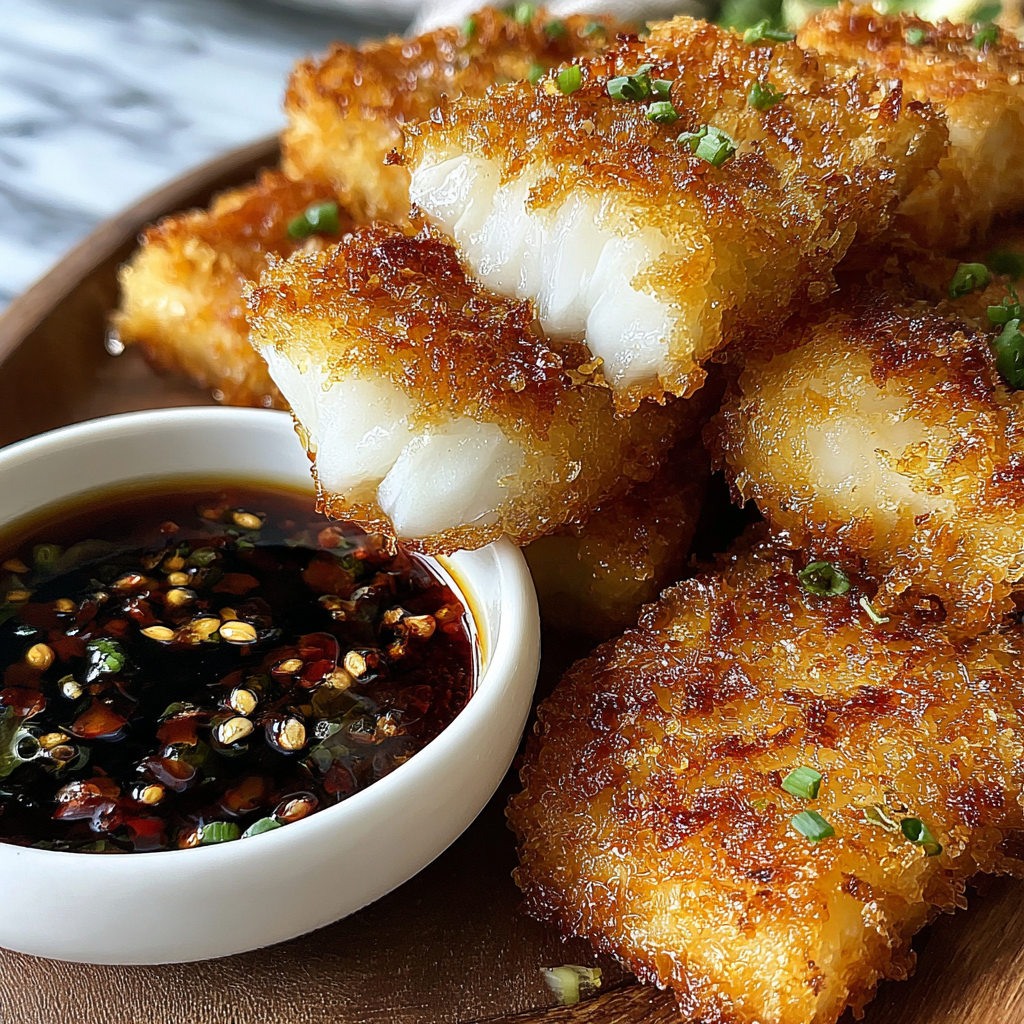
There's something wonderfully satisfying about cooking fish at home, especially when you can achieve that perfect crunch. Crispy fish not only impresses your family or guests but also engages your palate with its delicate flavors and textures.
Pairing this crispy delight with a homemade dipping sauce elevates the meal, allowing for a burst of flavor that complements the fish beautifully. Whether it’s a casual weeknight dinner or a gathering, this dish can be a star.
Ingredients
- 1 pound firm white fish (cod, haddock, or tilapia)
Choosing a firm white fish ensures that it holds together well during cooking. These types of fish have a mild flavor, allowing the crispy coating and sauce to shine without overpowering their natural taste. - 1 cup all-purpose flour
Flour forms the base of the breading, helping create a crispy exterior when fried. It also acts as a binding agent for the fish, ensuring the coating adheres well during cooking. - 1 cup breadcrumbs (panko preferred)
Using panko breadcrumbs gives a light and airy crunch that traditional breadcrumbs might lack. The larger size of panko helps achieve a great texture on the fish's surface. - 2 large eggs
Eggs act as the binder that allows the flour and breadcrumbs to stick to the fish. They also contribute moisture and richness, enhancing the overall flavor of the cooked fish. - 1 teaspoon salt
Salt is essential for seasoning both the fish and the breading. It heightens the flavors, ensuring that the dish is well-balanced and satisfying. - 1 teaspoon black pepper
Black pepper adds a mild heat and depth of flavor to the dish. It complements the fish without overwhelming it, making it an essential part of the seasoning. - Vegetable oil for frying (about 1 cup)
Oil is crucial for frying, providing the high heat needed to achieve that golden-brown crust. Choose a neutral-flavored oil to avoid altering the fish's taste. - 1/4 cup mayonnaise
Mayonnaise serves as a creamy base for the dipping sauce, bringing richness and a mild tanginess. It pairs well with various flavor additions to make the sauce truly unique. - 1 tablespoon Dijon mustard
Dijon mustard adds a zesty punch to the dipping sauce, balancing the richness of the mayo with its acidity. This gives the sauce a well-rounded flavor profile that complements the fish. - 1 tablespoon lemon juice
Fresh lemon juice brightens the dipping sauce, adding acidity that cuts through the richness. It enhances the overall flavors, making each bite of fish more enjoyable. - 1 teaspoon garlic powder
Garlic powder infuses the dipping sauce with a subtle background flavor. It enhances the overall taste and complements the fish without being overwhelming. - 1 tablespoon chopped fresh parsley (optional)
Fresh parsley adds a pop of color to the dipping sauce and a fresh herbal note. It isn’t essential, but it can brighten up the dish visually and flavor-wise.
Directions & Preparation
Step 1: Prepare the fish
Begin by patting the fish dry with paper towels to ensure the breading adheres properly. Moist fish will cause the coating to become soggy. Cut the fish into even-sized pieces to ensure uniform cooking and consistent texture.
Step 2: Set up the breading station
In one shallow dish, place the flour mixed with salt and pepper. In a second dish, whisk the eggs until well combined. Finally, in a third dish, add the breadcrumbs. This setup allows for a streamlined breading process, which is essential for achieving an even coating on the fish.
Step 3: Bread the fish
Coat each piece of fish first in flour, shaking off any excess. Then dip it into the egg mixture, allowing any excess to drip off before covering it with breadcrumbs. Press down to ensure the breadcrumbs stick. This method layers the textures effectively for that desired crunch.
Step 4: Heat the oil
In a large skillet, heat about 1/2 inch of vegetable oil over medium-high heat. You can test the oil's readiness by dropping in a breadcrumb; if it sizzles immediately, it's ready. Maintaining the right oil temperature is critical; too low, and the fish will absorb oil; too high, and it may burn.
Step 5: Fry the fish
Carefully add the breaded fish pieces to the hot oil without crowding the pan, cooking in batches if necessary. Fry for about 3-4 minutes on each side until golden brown and crispy. Flip with care to prevent breaking. This step is vital for creating that coveted crispy exterior while ensuring the inside remains tender and flaky.
Step 6: Drain the fish
Once cooked, transfer the fish to a plate lined with paper towels to absorb any excess oil. This step is crucial for avoiding greasiness, which can detract from the overall enjoyment of the dish. Letting it rest for a few minutes helps maintain its crispy texture.
Step 7: Prepare the dipping sauce
In a small bowl, combine the mayonnaise, Dijon mustard, lemon juice, garlic powder, and optional parsley. Mix until smooth and adjust seasoning to taste. This step is key for balancing flavors, allowing you to customize the sauce to your liking. Feel free to add more lemon juice or mustard for extra punch.
Step 8: Serve
Serve the crispy fish hot, alongside the dipping sauce for drizzling or dipping. This presentation not only looks appetizing but also invites enjoyment, as diners can customize their flavor experience. The combination of textures and flavors here will impress anyone at your table.
Selecting the Right Fish for Frying
Choosing the right fish is crucial for achieving the perfect crispy texture. Look for firm, white fish such as cod, haddock, or tilapia. These varieties are not only flavorful but also hold up well during frying, preventing them from falling apart. Freshness is key; if possible, get fish from a local source for the best flavor.
The Importance of Oil Temperature
Maintaining the proper oil temperature while frying is essential for achieving that golden, crispy coating. If the oil is too cold, the fish will absorb more oil, resulting in a greasy texture. Conversely, if it's too hot, the outside will cook too quickly, leaving the inside underdone. A thermometer can help you monitor the oil, ensuring perfect frying every time.
Customizing Your Dipping Sauce
The beauty of this dipping sauce lies in its adaptability. Consider incorporating your favorite flavors, such as a hint of sriracha for heat or dill for a fresh twist. This makes it not only a complement to the crispy fish but also a versatile sauce suitable for other dishes. Feel free to experiment and find the perfect balance to suit your preferences.
FAQs
What if my fish coating is too thick or too thin?
If the coating is too thick, it might need more careful frying to ensure the inside cooks through without burning the crust. If too thin, consider re-breading with a light dusting of flour or another dip in egg and breadcrumbs.
Can I make the dipping sauce spicier?
Absolutely! You can add hot sauce, cayenne pepper, or even fresh chili peppers to the sauce for an extra kick. Start with a little and adjust to your preferred spice level.
Why does my fish taste bland?
Bland fish can often result from insufficient seasoning in the coating or the sauce. Make sure to season both well, and perhaps incorporate herbs or spices to ramp up the flavors.
How can I scale the recipe for a larger gathering?
To scale the recipe, simply multiply the ingredients by the number of servings you need. Ensure you have enough frying space, cooking in batches to maintain oil temperature.
What sides work well with crispy fish?
Crispy fish pairs excellently with fresh salads, coleslaw, or even simple steamed vegetables. Consider serving with some crispy fries or a light grain salad for a well-rounded meal.
How can I ensure my fish remains tender inside?
To achieve a tender inside while having a crispy exterior, avoid overcrowding the pan while frying. This ensures even cooking and helps maintain the desired texture.
Conclusion
Crispy fish paired with a flavorful dipping sauce is a simple yet impressive dish that any home cook can master. By following these steps and tips, you can create a dish that not only satisfies your craving for crunch but also becomes a staple in your culinary repertoire.
Encourage creativity with the dipping sauce and garnish options, allowing each cook to make the dish their own. Dive into the delightful world of frying, and enjoy the delicious results that come from your own kitchen.
Recipe Card
Crispy Fish and Flavorful Dipping Sauce for Home Cooks
Ingredients
- 1 pound firm white fish cod, haddock, or tilapia
- 1 cup all-purpose flour
- 1 cup breadcrumbs panko preferred
- 2 large eggs
- 1 teaspoon salt
- 1 teaspoon black pepper
- Vegetable oil for frying about 1 cup
- 1/4 cup mayonnaise
- 1 tablespoon Dijon mustard
- 1 tablespoon lemon juice
- 1 teaspoon garlic powder
- 1 tablespoon chopped fresh parsley optional
Instructions
- Prepare the fish
- Set up the breading station
- Bread the fish
- Heat the oil
- Fry the fish
- Drain the fish
- Prepare the dipping sauce
- Serve
Notes
Additional serving suggestions: pair with a crisp salad, garlic bread, or roasted seasonal vegetables for balance.
For make-ahead, prep components separately and assemble just before heating to preserve texture.
Taste and adjust with acid (lemon/vinegar) and salt right at the end to wake up flavors.